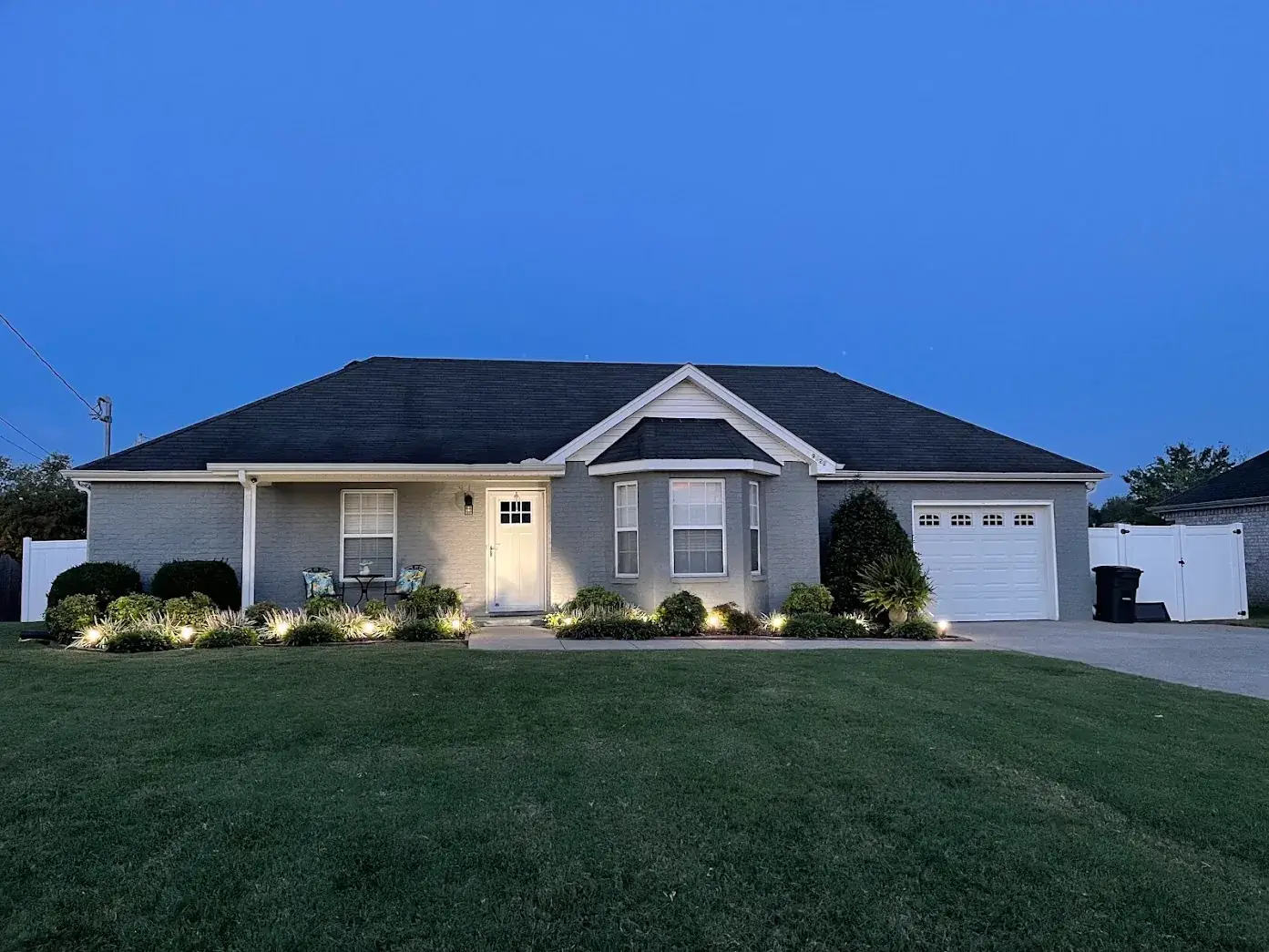
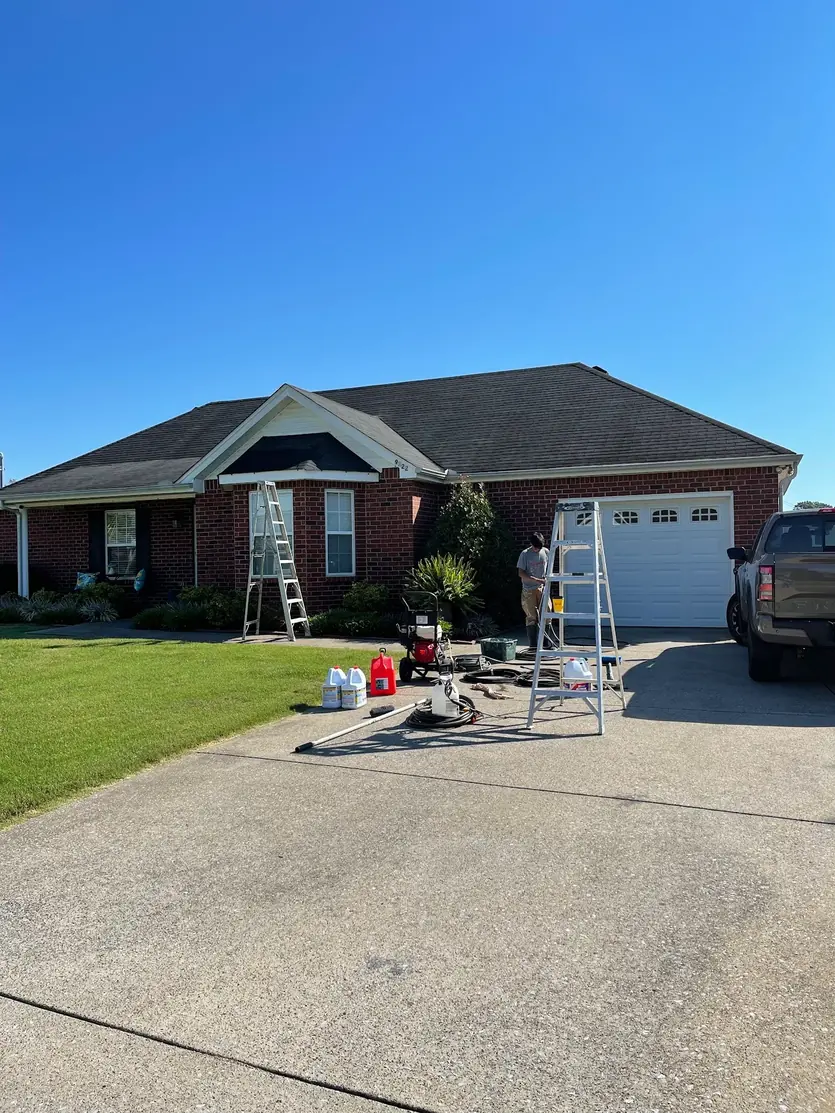
It is not dirt
The dark grey or black film on a shaded wall is usually mildew, and it is growing rather than settling. That distinction matters because washing dirt off works and washing mildew off does not, at least not permanently. If it is only cleaned, it comes back, and if it is painted over, it comes back through.
Why the north side
North-facing walls and anything under a deep eave get less direct sun, stay damp longer after rain, and dry more slowly in humid weather. Add mature trees close to the house and you have shade plus organic debris, which is exactly the condition mildew wants. In Middle Tennessee that combination is common enough that we expect it on most exteriors we look at.
What has to happen before paint
The growth has to be killed and removed, not just knocked back, and the surface has to dry properly before primer. In humid weather that dry time is longer than people expect and it cannot be rushed with a fan and optimism. Painting over live mildew traps it under the film, where it keeps working and eventually shows through as staining or causes the coat to let go.
Keeping it off
After a repaint, the things that help are boring and effective: keep shrubs cut back off the siding so air moves, clear gutters so water is not running down a wall, and wash shaded elevations periodically rather than waiting until they are grey. A wall that dries out between rains stays clean much longer than one that never does.
When it is something else
Not every dark streak is mildew. Rust bleed from fasteners, tannin bleed through paint on cedar, and dirt streaking under a leaking gutter all look similar from the ground and need different fixes. Part of what we do at the estimate is tell you which one you are actually looking at.